


How Do Memory Care Communities Accommodate Different Faith Practices?
When a senior loved one moves into a memory care community, the family members carry many concerns. You want safety and compassionate care for them. But you also want your loved one’s identity to be honored, including the faith that may have guided them throughout their life. Spiritual comfort often plays a powerful role for people experiencing cognitive decline.
The question is simple, but deeply personal: Will your loved one still have access to the familiar faith practices that bring peace and reassurance? The good news is that many memory care communities recognize how important faith remains, even as memory changes. They thoughtfully build spiritual support into care routines, respecting diverse beliefs while adapting practices to meet each resident’s needs.
This article will help you understand how memory care communities accommodate different faith traditions while supporting emotional well-being and honoring your loved one’s history.
Respecting Individual Beliefs in a Supportive Environment
When someone moves into memory care, they’re not starting from scratch. They’re bringing a whole life with them, decades of habits, values, and moments that shaped who they are. And for a lot of people, faith is right in the middle of that.
That doesn’t just go away with memory loss.
The best memory care teams get this. They take the time to ask about it upfront; what traditions mattered, which holidays were celebrated, how someone practiced their faith (or didn’t). It’s not just a checkbox. It’s part of understanding the person.
And no, it’s not cookie-cutter. There’s no “one faith fits all” model. Some residents want to attend regular services. Others just want a quiet space to reflect or hear music that brings peace. The point is: belief, whatever form it takes, is treated with respect. It’s folded into care gently, naturally, and without pressure.
Because in the middle of all the change that comes with dementia, something familiar, something spiritual, can be an anchor. And that really matters.
Creating Familiar, Gentle Spiritual Routines
When memory starts to slip, routine becomes more than just structure; it becomes something you can hold onto. Especially when it’s tied to something deeper, like faith.
In many memory care communities, they keep it simple. A short prayer in the morning, soft hymns playing in the background, and maybe someone reading a scripture passage that just feels known. Nothing loud, nothing demanding. Just small spiritual anchors, gently placed.
These aren’t big, dramatic moments. They’re quiet. Familiar. Things that don’t ask too much of the mind but still speak to the heart. And that’s the point, they create comfort without causing confusion.
Over time, these routines become part of the rhythm. Predictable in the best way. They help build a day that feels safe, not because everything is remembered, but because something still feels right.
Small Group or One-on-One Opportunities for Worship
When someone is dealing with memory loss, big crowds and loud services can feel like too much. That’s why many memory care communities rethink how they offer spiritual support, less about ceremony, more about comfort.
Instead of large services, you’ll often see smaller, quieter gatherings. A brief devotional in a cozy room. Or a clergy member stopping by for a personal visit. Ministers, priests, rabbis, they’ll often come in just to sit, listen, pray. No pressure, just presence. It’s that kind of one-on-one care that helps residents stay connected to something deeper, something familiar.
Staff might lead a simple reflection or a short group prayer, knowing not everyone can follow every word. And that’s okay. What matters is that residents feel included, even if they’re just listening, even if they’re not sure where they are at the moment.
Caregivers step in gently. A guiding hand during prayer. A quiet reminder of the words. Just enough help to keep someone feeling part of the moment, not lost in it.
The goal isn’t perfect participation. It’s emotional safety. Spiritual dignity. Creating space for peace, even in the fog.
Adapting Activities for Cognitive Comfort
In memory care, it’s not enough to just offer programs. What matters is how well those programs fit, especially when it comes to faith.
Traditional religious practices don’t always translate cleanly when someone’s abilities are shifting. Long readings? Complicated language? Big, structured services? That can quickly become overwhelming. So the best communities adapt not by removing the faith, but by softening the edges for residents.
A full-length service might get trimmed down to a few quiet prayers and a familiar hymn. Scripture readings are simplified, making it easier to follow. And the hymns? They’re chosen for memory, not novelty. Something that sparks recognition. Something your loved one can hum along to without needing all the words.
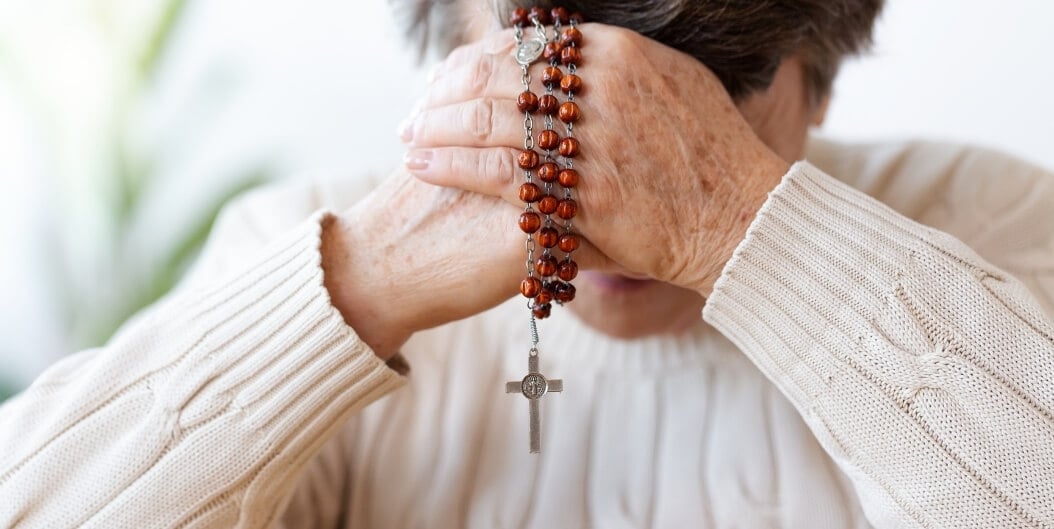
Visuals help too. A cross. A prayer card. A rosary. These little cues can cut through the fog in a way words can’t. Even if someone can’t say what it means, they still feel it. It registers.
That’s the whole point: preserving what matters most without asking someone to be who they were ten years ago. Letting them show up as they are. Faith doesn’t disappear with memory. But it might need a different doorway in.
Encouraging Family Involvement in Faith Practices
Nobody knows your loved one’s spiritual history like you do. You’ve seen the traditions, the holidays, the quiet rituals that meant something over the years. That context? It’s gold. And in memory care, it matters more than ever.
The best communities don’t just allow families to be involved; they invite it. Maybe that looks like you sitting in on a prayer time. Or showing up for a holiday service with the hymns they always loved. Maybe it’s as simple as dropping off a worn devotional or a playlist of gospel songs that always brought them peace. Whatever it is, it becomes part of the rhythm of their care.
And when the bigger religious holidays roll around, these communities know how to make them feel right. Whether it’s Passover or Easter or a candle-lighting for a loved one who’s passed, families get the chance to join in, not as guests, but as part of the ongoing story.
Trained Staff Provide Sensitive, Respectful Support
When you’re caring for people with different faith backgrounds, it’s not just about being nice, it’s about knowing what to say, and maybe more importantly, what not to say. Memory care staff get real training on this. Not just the “be respectful” training. Actual, practical tools for how to handle these moments.
Like, say a resident used to love going to services but now gets overwhelmed in a group. You don’t just keep dragging them there. Staff might suggest something smaller. Quieter. Or if someone still finds comfort in their faith but struggles to follow along, the team doesn’t try to fix it; they just show up. Maybe sit with them. Let them have a moment, whatever that looks like now.
And here’s what matters most: the staff listen. To the resident. To the family. Even if they don’t personally believe the same things, they don’t let that get in the way. No judgment. Just support.
It’s not flashy. But it’s honest, and it respects where people are, not just physically, but emotionally and spiritually too.
Give Your Loved One a Place to Feel Known, Valued, and Supported at Landon Ridge Alamo Ranch Assisted Living & Memory Care
Faith doesn’t just disappear when memory fades. It stays, maybe not always in the same way, but in small rituals, familiar songs, quiet moments that feel like home.
At Landon Ridge Alamo Ranch Assisted Living & Memory Care, we take personal beliefs seriously. Our team is trained to support all kinds of beliefs. It’s not about pushing anything, it’s about meeting each person where they are. Making sure they feel understood, grounded, and still connected to what matters.
If you’re curious about how that looks, schedule a tour to our community today. Talk to the team. Walk through the space. You’ll see how faith, whatever that means to your family, can still be part of life, even as memory changes.


